



Last updated July 24, 2026 · Written for education, not medical advice. Talk with your own doctor or a registered dietitian before making big changes to your diet or medicines.
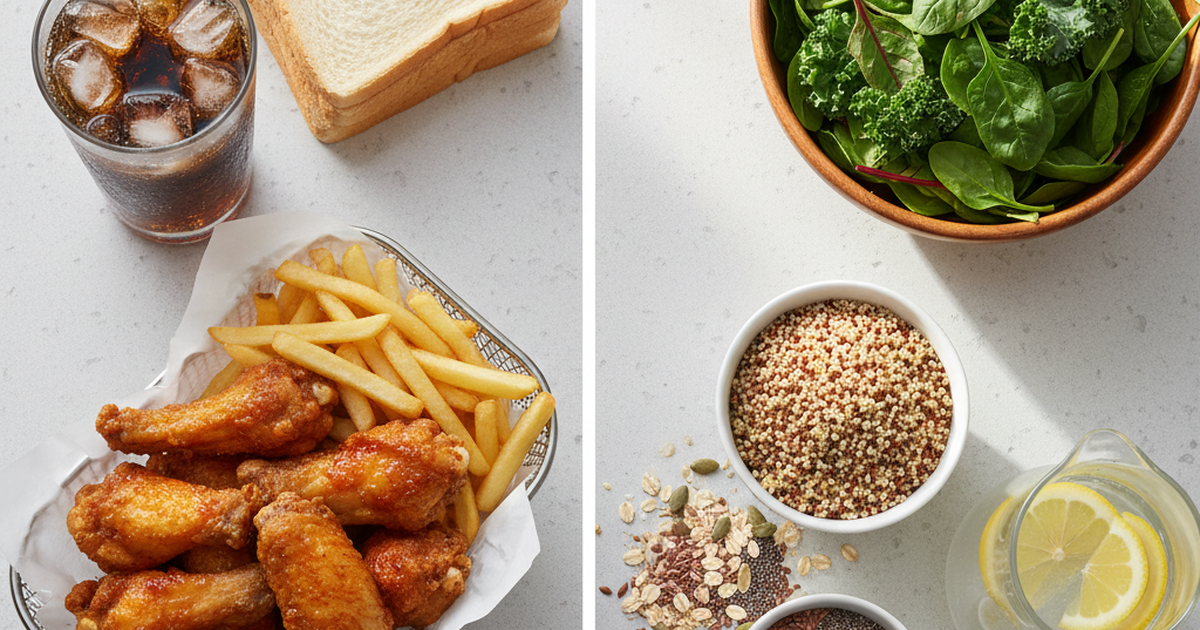
If you have type 2 diabetes, the foods worth limiting most are sugar-sweetened drinks (regular soda, sweet tea, fruit juice, energy and sports drinks), refined “white” carbohydrates like white bread and sugary cereal, sweets and desserts, deep-fried foods, and processed meats high in saturated fat and salt. These foods raise blood sugar quickly, add calories without much nutrition, and push up the heart-disease risk that already comes with diabetes. No single food is strictly forbidden, though — how often you eat it and how much you eat matter more than any one meal.


Below is a plain-language look at the foods that most often cause trouble, why they do, and easier swaps you can make today. The point is not a life of “can’t” — it is understanding which foods work against you so you can enjoy the rest with more confidence.
Why some foods are harder on type 2 diabetes
Type 2 diabetes changes how your body handles blood sugar (glucose). Foods that flood your bloodstream with fast-digesting sugar and refined starch force blood glucose up quickly, and your body has a harder time bringing it back down. Over time, frequent high spikes make blood sugar harder to manage. According to the National Institute of Diabetes and Digestive and Kidney Diseases (NIDDK), a diabetes eating plan focuses on portion size, more non-starchy vegetables, and fewer added sugars and refined grains.
There is a second reason certain foods matter: heart health. People with type 2 diabetes have a higher risk of heart disease and stroke, so the American Diabetes Association and the American Heart Association both stress cutting back on saturated fat, trans fat, and excess sodium as well as sugar. That is why fried foods and processed meats show up on the “limit” list even though they are not sugary.
The foods to limit most
1. Sugar-sweetened drinks
Regular soda, sweet tea, fruit juice, sweetened coffee drinks, and energy or sports drinks are the single biggest food to rethink. Liquid sugar hits your bloodstream fast, does little to fill you up, and can add hundreds of calories a day. The American Diabetes Association specifically recommends avoiding sugar-sweetened beverages. Easier swaps: water, sparkling water with a squeeze of lemon or lime, or unsweetened tea. If you drink juice, a small glass with a meal is gentler than sipping it on its own.
2. Refined “white” carbohydrates
White bread, white rice, regular pasta, sugary breakfast cereals, and many crackers and snack foods are made from refined grains stripped of their fiber. Without fiber to slow digestion, they raise blood sugar faster than their whole-grain cousins. This is where the glycemic index of foods becomes useful. Easier swaps: whole-grain or sprouted bread, brown or wild rice, whole-wheat or legume-based pasta, and oatmeal instead of sugary cereal. Even keeping the same food but shrinking the portion and pairing it with protein and vegetables helps.
3. Sweets, pastries, and desserts
Cake, cookies, candy, ice cream, and pastries combine refined flour, added sugar, and often unhealthy fat — a triple hit for blood sugar and calories. You do not have to give up dessert forever. The realistic goal is smaller portions, less often, and ideally after a balanced meal so the rest of the food blunts the sugar spike.
4. Fried foods and foods high in trans fat
French fries, fried chicken, doughnuts, and many packaged baked goods are high in the kinds of fat that raise heart-disease risk. Because diabetes already raises that risk, the American Heart Association encourages choosing baked, grilled, roasted, or air-fried options and limiting foods with partially hydrogenated oils. Easier swaps: oven-baked potato wedges, grilled or roasted chicken, and home-air-fried favorites.
5. Processed and fatty red meats
Bacon, sausage, hot dogs, deli meats, and heavily marbled cuts are high in saturated fat and sodium. Leaner proteins are a friendlier everyday choice. See our guide to heart-healthy proteins for type 2 diabetes for practical picks. Easier swaps: skinless poultry, fish, eggs, beans and lentils, and tofu.
6. High-sodium packaged foods
Canned soups, frozen dinners, chips, and many restaurant meals carry large amounts of sodium, which can raise blood pressure — a special concern when you have diabetes. Most major health authorities, including the American Heart Association, suggest most adults aim for no more than about 2,300 mg of sodium a day, and closer to 1,500 mg if you have high blood pressure. Reading the nutrition label, as shown above, is the fastest way to compare products.
7. Alcohol, in more than small amounts
Alcohol can cause blood sugar to drop — sometimes hours later — especially if you take insulin or certain medicines, and sweet mixers and cocktails add sugar. If you drink, the U.S. Centers for Disease Control and Prevention (CDC) and ADA advise keeping it moderate (up to one drink a day for women, two for men), never on an empty stomach, and checking with your clinician about your medicines.
How to think about “avoid” without feeling deprived
It helps to sort foods into three buckets instead of “good” and “bad”: everyday foods (non-starchy vegetables, whole grains, lean protein, beans, nuts, fruit in reasonable amounts), sometimes foods (starchy sides, sweeter fruits, a modest dessert), and rarely foods (sugary drinks, fried foods, sweets). A useful, no-counting starting point from the ADA and CDC is the Diabetes Plate Method: fill half your plate with non-starchy vegetables, one quarter with lean protein, and one quarter with a carbohydrate food, plus water to drink.
If you want a fuller framework, our type 2 diabetes diet guide walks through building balanced meals, and our low-carb eating overview explains how some people lower carbohydrate intake to steady their blood sugar. What matters most is a pattern you can keep up, not a perfect week.
Watch: worst foods to limit with diabetes

Frequently asked questions
What should a type 2 diabetic eat daily?
Aim for a daily pattern built around non-starchy vegetables, lean protein, high-fiber whole grains, beans, nuts, and a moderate amount of fruit, with water as your main drink. The Diabetes Plate Method above is an easy way to build each meal without counting. A high-fiber, protein-forward breakfast is a good anchor — see our breakfast ideas for type 2 diabetes.
Are there “superfoods” for diabetes?
No food cures or reverses diabetes on its own, but the ADA highlights nutrient-dense choices worth eating often: leafy greens, berries, beans and lentils, nuts, fatty fish rich in omega-3s (like salmon), and whole grains. Think of these as everyday building blocks rather than magic bullets.
What is the first thing a diabetic should eat in the morning?
There is no single required first food, but a breakfast that pairs protein and fiber — for example eggs with vegetables, or plain Greek yogurt with berries and nuts — tends to steady blood sugar better than a sugary cereal or pastry. If your morning readings run high, talk with your care team about timing and portions.
The bottom line
With type 2 diabetes, the foods worth limiting most are sugary drinks, refined white carbs, sweets, fried foods, processed meats, very salty packaged foods, and heavy alcohol. None of these are truly off-limits — the goal is to make them occasional rather than everyday, lean on simple swaps, and build most meals around vegetables, lean protein, and whole grains. Small, steady changes add up, and your clinician or a registered dietitian can help you tailor a plan to your medicines and your life.
Sources include the American Diabetes Association, the National Institute of Diabetes and Digestive and Kidney Diseases (NIDDK), the American Heart Association, and the U.S. Centers for Disease Control and Prevention. This article is for general education and is not a substitute for personalized medical advice.

