


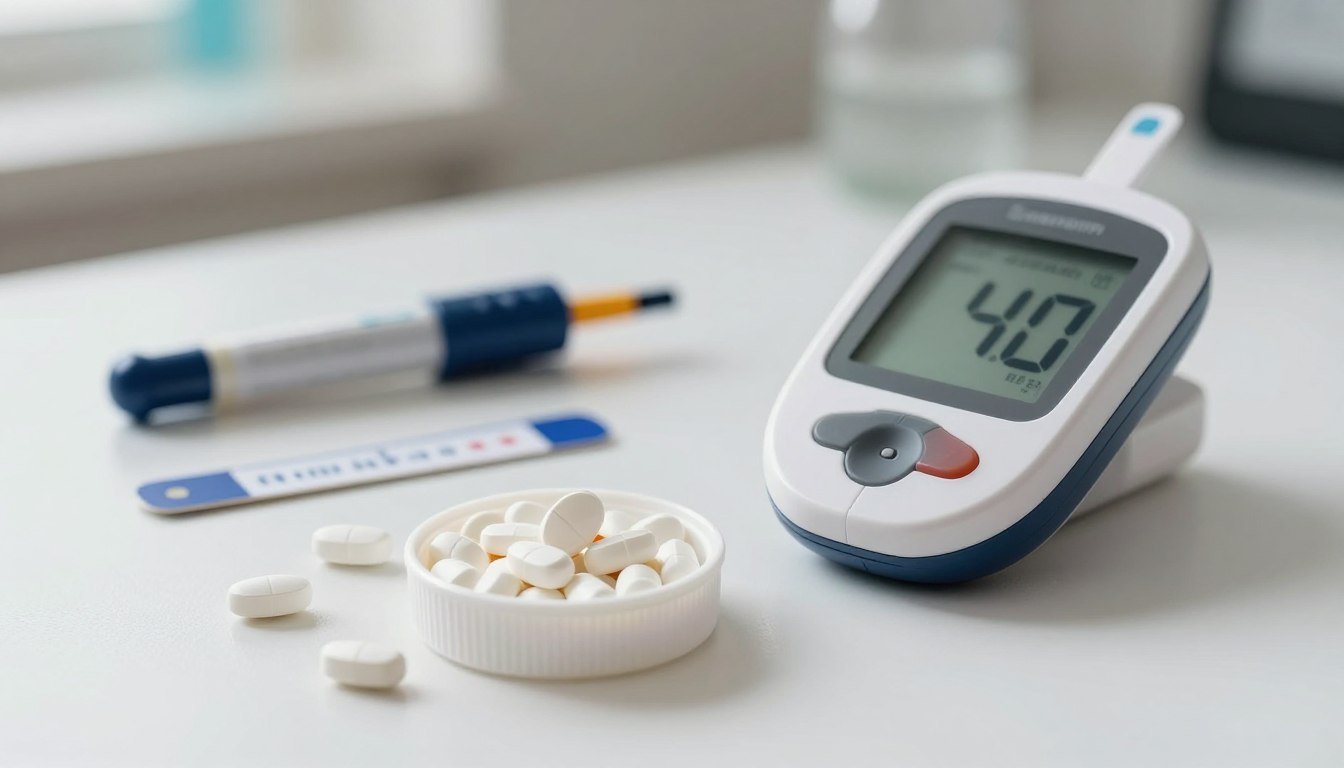
Did you know over thirty-seven million Americans live with diabetes? A fifth of them don’t even know they have it. Taking care of your health is very important.
Finding the right medication options for diabetic treatment makes managing blood sugar easier. You want a plan that fits your life and makes you feel good.
Metformin is often the first choice. But, it’s not the only one. Understanding how these tools work helps you talk better with your doctor.
Learning how your body reacts to different things is part of the journey. Everyone is different, so your care should match your goals. You deserve to feel strong and capable every day.
Key Takeaways
- Metformin helps lower glucose production in the liver.
- Newer drug classes can also protect heart health.
- Consistent testing improves your daily results over time.
- Consult medical experts regarding your specific care plan.
- Healthy habits boost the success of any drug therapy.
- Early action prevents long-term health complications.
Understanding Your Diabetes Diagnosis and Treatment Goals
Managing diabetes starts with knowing your diagnosis and setting goals. When you get diabetes, it’s key to understand its impact on your health. Your doctor will help you, but knowing helps you manage better.
What Happens When Your Blood Sugar Is Too High
High blood sugar can cause health problems. It leads to symptoms like thirst, urination, fatigue, and blurred vision. If not controlled, it can damage nerves, kidneys, and eyes. Knowing these risks shows why managing blood sugar is vital.
Setting Realistic A1C and Blood Sugar Targets
Setting reachable A1C and blood sugar goals is important. Your A1C test shows your blood sugar average over three months.Work with your doctor to set goals based on your health and lifestyle. For many, aiming for an A1C under 7% is good. Regular checks and plan changes help you meet these goals and lower risks.
Why Metformin Is Usually Your First Medication
Many people with type 2 diabetes start with metformin. It’s a good choice because it’s easy to take and works well. Metformin is key in managing diabetes.
What Makes Metformin the Gold Standard Treatment
Metformin is first choice because it lowers blood sugar without causing weight gain or low blood sugar. It helps by making less glucose in the liver and making insulin work better.
Doctors often start with metformin for type 2 diabetes because it’s safe and lowers A1C levels well.
Who Benefits Most from Metformin
Metformin helps those newly diagnosed with type 2 diabetes. It’s also good for those who are overweight or at risk of heart disease. Metformin can help the heart too.
When Metformin Might Not Be Right for You
Metformin is usually safe, but not for everyone. Those with kidney or liver problems might need something else. If you get stomach problems, you might need a different drug.
It’s important to know if metformin is right for you. Your doctor will look at your health and medical history. They’ll decide if metformin is best for you.
How Metformin Works to Lower Your Blood Sugar
Metformin is often the first choice for high blood sugar. But how does it work? It’s a key drug for type 2 diabetes, helping your body control blood sugar better.
Understanding Metformin’s Three-Way Action
Metformin has three main actions to lower blood sugar. First, it decreases glucose production in your liver. The liver makes a lot of glucose, and metformin cuts down on this. This lowers your blood sugar.
Second, it increases insulin sensitivity. This means your body can use insulin better. It helps lower blood sugar even more. Lastly, metformin slows down glucose absorption from your gut. This prevents a quick rise in blood sugar after eating.

What to Expect in Your First Months on Metformin
Starting metformin might cause stomach issues like diarrhea or nausea. These side effects are usually short-lived. They can be helped by adjusting the dose or eating with the medication.
As you get used to it, your blood sugar will likely stabilize. Keep an eye on it and talk to your doctor often. They can adjust your treatment as needed.
Exploring Oral Medications for Diabetes Beyond Metformin
Managing diabetes often means trying different oral medications besides metformin. Metformin is usually the first choice, but other options are available if you need more help. These can help control your blood sugar levels better.
These medications work in different ways to manage diabetes. Knowing your options can help you choose the best treatment for you.
Sulfonylureas: Glipizide, Glyburide, and Glimepiride
Sulfonylureas help your pancreas make more insulin. This can lower your blood sugar. Glipizide, glyburide, and glimepiride are common ones.
Key benefits: They are good at lowering blood sugar and are not very expensive.
Considerations: They can cause low blood sugar and might make you gain weight.
Meglitinides: Repaglinide and Nateglinide for Mealtime Control
Meglitinides, like repaglinide and nateglinide, work like sulfonylureas but last shorter. They are taken before meals to control blood sugar spikes.
Key benefits: They help control blood sugar after meals and you can adjust your doses.
Considerations: You need to take them several times a day and they can cause low blood sugar.
Thiazolidinediones: Pioglitazone and Rosiglitazone
Thiazolidinediones (TZDs), like pioglitazone and rosiglitazone, make your cells more sensitive to insulin. They are often used with other diabetes drugs.
Key benefits: They improve insulin sensitivity and may help your heart.
Considerations: They can cause fluid retention and increase the risk of heart failure. Pioglitazone might also increase the risk of bladder cancer.
| Medication Class | Examples | How They Work | Key Benefits |
|---|---|---|---|
| Sulfonylureas | Glipizide, Glyburide, Glimepiride | Stimulate insulin release | Effective at lowering blood sugar |
| Meglitinides | Repaglinide, Nateglinide | Stimulate insulin release (short-acting) | Helps control mealtime blood sugar spikes |
| Thiazolidinediones | Pioglitazone, Rosiglitazone | Improve insulin sensitivity | Improves insulin sensitivity, potential cardiovascular benefits |
DPP-4 Inhibitors: Gentle and Effective Blood Sugar Control
DPP-4 inhibitors are a gentle way to control blood sugar for people with diabetes. They help your body make more insulin naturally. This makes them a good choice for managing type 2 diabetes.
How Januvia, Tradjenta, and Onglyza Support Your Natural Insulin
DPP-4 inhibitors, like Januvia, Tradjenta, and Onglyza, block an enzyme called DPP-4. This enzyme breaks down incretin hormones, which help control glucose. By stopping this breakdown, they help your pancreas make more insulin when blood sugar is high.
They also reduce the liver’s glucose release. Key benefits include lowering HbA1c levels without causing weight gain or heart failure risks.
Why DPP-4 Inhibitors Rarely Cause Low Blood Sugar
DPP-4 inhibitors rarely cause low blood sugar. They only make insulin when blood sugar is high. This makes them safer than other diabetes drugs that can cause low blood sugar.
Overall, DPP-4 inhibitors are a reliable and safe choice for treating diabetes. They offer a good balance of effectiveness and safety.
GLP-1 Receptor Agonists: Powerful Medications with Weight Loss Benefits
GLP-1 receptor agonists are a new type of medicine. They help control diabetes and can help you lose weight. They work by copying a natural hormone in your body that lowers blood sugar.
Injectable Options: Ozempic, Trulicity, Victoza, and Mounjaro
These medicines are given as injections. You can choose from Ozempic, Trulicity, Victoza, and Mounjaro. They all help control blood sugar levels.
- Ozempic: Known for its once-weekly dosing, Ozempic is a popular choice for many patients.
- Trulicity: Also administered once a week, Trulicity is designed to be easy to use with its prefilled pen.
- Victoza: Victoza is taken once daily and is often prescribed for its effectiveness in lowering blood sugar.
- Mounjaro: A newer option, Mounjaro is also administered weekly and has shown promising results in clinical trials.
How These Medications Protect Your Heart and Help You Lose Weight
GLP-1 receptor agonists have many benefits. They can protect your heart and help you lose weight. This is great news for people with diabetes.


Getting Comfortable with Injectable Medications
Starting injectable medicines can seem scary. But, most come with easy-to-use devices. Talk to your doctor to feel more at ease with your treatment.
Knowing your options can help you manage your diabetes better. GLP-1 receptor agonists are a great choice. They help control blood sugar, aid in weight loss, and protect your heart.
SGLT2 Inhibitors: Removing Sugar Through Your Kidneys
SGLT2 inhibitors are a new type of diabetes medicine. They help remove extra sugar through your kidneys. This not only controls blood sugar but also helps your heart and kidneys.
Understanding How Jardiance, Farxiga, and Invokana Work Differently
SGLT2 inhibitors, like Jardiance, Farxiga, and Invokana, block the SGLT2 in your kidneys. This stops your body from reabsorbing glucose, so more sugar goes out in your urine. Your blood sugar levels go down. This way of working is different from insulin, making these medicines useful for many people.
Heart and Kidney Protection Benefits You Should Know About
Studies show SGLT2 inhibitors protect your heart and kidneys. They lower the chance of heart attacks and strokes. They also slow kidney disease. This is key for people with diabetes, who face higher risks.
| SGLT2 Inhibitor | Cardiovascular Benefits | Renal Benefits |
|---|---|---|
| Jardiance | Reduced risk of cardiovascular death | Slowed progression of kidney disease |
| Farxiga | Lower risk of major adverse cardiovascular events | Reduced risk of end-stage renal disease |
| Invokana | Decreased risk of cardiovascular events | Slowed decline in kidney function |
Even with their benefits, SGLT2 inhibitors can have side effects. These include more genital infections and diabetic ketoacidosis. Talk to your doctor about the good and bad sides.
Insulin Therapy for Diabetes: Types and When You Need It
Managing diabetes often means using insulin therapy. This helps keep blood sugar levels in check. If your body can’t make enough insulin, or if your current treatment isn’t working, insulin therapy can help.
There are many types of insulin, each with its own use. Knowing the differences is important for finding the right insulin for you.
Understanding Basal Insulin: Lantus, Levemir, Tresiba, and Toujeo
Basal insulin is used all day and night. It helps control blood sugar between meals and when you sleep. You take it once or twice a day. Lantus, Levemir, Tresiba, and Toujeo are common basal insulins. They keep your insulin levels steady.
Mealtime Insulin: Humalog, Novolog, and Apidra
Mealtime insulin is taken before meals. It helps control blood sugar after eating. Humalog, Novolog, and Apidra are mealtime insulins. They work fast and are taken right before meals.
Premixed Insulin Combinations for Simplified Dosing
Premixed insulin combinations are a simple option. They mix basal and mealtime insulin. This means fewer injections for you. They usually have a mix of intermediate-acting and short-acting insulin.
Choosing Between Insulin Pens, Vials, and Pumps
How you take insulin is also important. You can use insulin pens, vials with syringes, or insulin pumps. Insulin pens are easy and convenient. Vials and syringes give more flexibility. Insulin pumps give insulin all day and can give extra doses at meals.
Finding the right insulin plan is key. It should fit your needs and lifestyle. Talk to your healthcare provider to find the best insulin for you.
Medication Options for Diabetic Treatment: How to Choose the Best Plan
Diabetes treatment is more than just taking medicine. It’s about finding a plan that fits your life. With so many options, picking the right medicine can be hard. Your doctor will guide you to find the best medicine for you.
Matching Medications to Your Lifestyle and Health Goals
When picking a diabetes medicine, think about your lifestyle and goals. For example, if you don’t want to gain weight, metformin or SGLT2 inhibitors might be good. They don’t make you gain weight and might even help you lose some.
The American Diabetes Association says, “Choose diabetes medicine based on how well it works, how safe it is, how well you can tolerate it, and its cost.”
“The choice of diabetes medication should be individualized based on factors such as efficacy, safety, tolerability, and cost.”
Understanding Combination Therapy Approaches
Managing diabetes often means using more than one medicine. Using different medicines together can control blood sugar better. For example, metformin with a GLP-1 receptor agonist can lower blood sugar and help with weight.
| Medication Class | Examples | Key Benefits |
|---|---|---|
| Metformin | Glucophage | Effective glucose lowering, weight neutral |
| SGLT2 Inhibitors | Jardiance, Farxiga | Cardiovascular benefits, weight loss |
| GLP-1 Receptor Agonists | Ozempic, Trulicity | Weight loss, cardiovascular benefits |
Considering Cost, Insurance Coverage, and Generic Alternatives
Diabetes medicines can cost a lot. It’s important to talk to your doctor about the cost. Look for medicines covered by your insurance. Generic medicines, like metformin, can also be cheaper.

The best medicine plan is one that works well, is safe, and affordable. It should also fit your lifestyle and health goals. Regular talks with your doctor will help adjust your plan as needed.
Managing Diabetes Medication Side Effects Effectively
When you’re on diabetes medication, it’s key to know about side effects. These can make your treatment better. But, some diabetes meds can cause unwanted effects.
Knowing the side effects of your meds is crucial. It makes life better and helps you follow your treatment plan.
Handling Metformin’s Digestive Side Effects
Metformin helps lower blood sugar but can upset your stomach. It might cause nausea, diarrhea, and stomach cramps. Start with a small dose and increase it slowly. Taking it with food can also help.
Recognizing and Preventing Hypoglycemia
Some meds can cause low blood sugar, or hypoglycemia. Signs include shakiness, sweating, and confusion. Check your blood sugar often, eat well, and adjust your meds or food as needed.
What to Watch for with Each Medication Class
Different meds have different side effects. For example:
–Sulfonylureascan cause low blood sugar and weight gain.
–GLP-1 Receptor Agonistsmay upset your stomach.
–SGLT2 Inhibitorscan lead to genital infections.
Knowing these side effects helps you work with your doctor to manage them.
When Side Effects Require Switching Medications
If side effects are bad or last a long time, you might need to change meds. Always talk to your doctor before changing your meds.
| Medication Class | Common Side Effects | Management Tips |
|---|---|---|
| Metformin | Digestive issues (nausea, diarrhea) | Take with food, start with low dose |
| Sulfonylureas | Hypoglycemia, weight gain | Monitor blood sugar, adjust diet |
| GLP-1 Receptor Agonists | Gastrointestinal issues (nausea, vomiting) | Gradual dose increase, take with meals |
| SGLT2 Inhibitors | Genital infections, dehydration | Maintain good hygiene, stay hydrated |
Creating Your Personal Medication Management System
To control blood sugar well, you need a custom medication plan. Managing diabetes is more than just taking meds. It’s about making a system that fits your life.
Dr. Andrew Boulton, a top diabetes expert, said,
“The key to successful diabetes management lies in understanding your condition and tailoring your treatment to your individual needs.”
This shows how important it is to make your treatment plan personal.
Taking Your Medications at the Right Time with Food
Timing your meds with meals can make them work better and reduce side effects. For example, taking metformin with food can lessen stomach problems. It’s key to follow the exact instructions for each medication.
Here are some general tips:
- Take your meds at the same time every day to keep a routine.
- Know if you should take your meds before, during, or after meals.
- Use a pill box or a mobile app to remember when to take your meds.
Tracking Your Blood Sugar Response to Medications
Checking your blood sugar often helps you see how your body reacts to your meds. Keeping a log of your readings can give you important insights into how well your treatment is working.
Consider using a continuous glucose monitoring system (CGMS) for more detailed data. This can show patterns and changes that might not be clear with just occasional checks.
Working with Your Healthcare Team to Adjust Your Treatment
Your healthcare team is your partner in managing diabetes. Regular visits and talking openly about your meds’ effects and any side effects are key.
Be prepared to discuss:
- Your blood sugar logs and any patterns you’ve noticed.
- Any side effects or concerns you have about your meds.
- Any changes in your lifestyle or health that might affect your treatment plan.
By working with your healthcare team and staying informed, you can make a medication system. This system will not only control your blood sugar but also improve your life quality.
Conclusion
Managing diabetes well means finding the right medicines for you. You’ve learned about many options, like Metformin and insulin therapy. These can help keep your blood sugar in check.
Each medicine has its own good points. For example, Metformin helps lower glucose. Some newer medicines, like SGLT2 inhibitors and GLP-1 receptor agonists, also protect your heart. Your doctor will help pick the best one for you.
It’s important to work with your healthcare team. They will check how you’re doing and change your treatment if needed. This way, you can reach your blood sugar goals and avoid serious problems.
With the right medicine and a good plan, you can manage your diabetes well. This improves your health and happiness. Look into the best diabetes medicines and find what’s best for you.