


—
Introduction
The term “double diabetes” has sparked debates in medical circles and media since the early 2000s. Often dubbed a “hybrid” condition, it describes individuals who exhibit symptoms of both type 1 and type 2 diabetes—a phenomenon increasingly observed as obesity rates rise globally. While not an official diagnosis, the concept highlights the blurred lines between traditional diabetes classifications. This article dives into the science behind double diabetes, its risk factors, diagnostic challenges, and emerging management approaches.

What Is Double Diabetes?
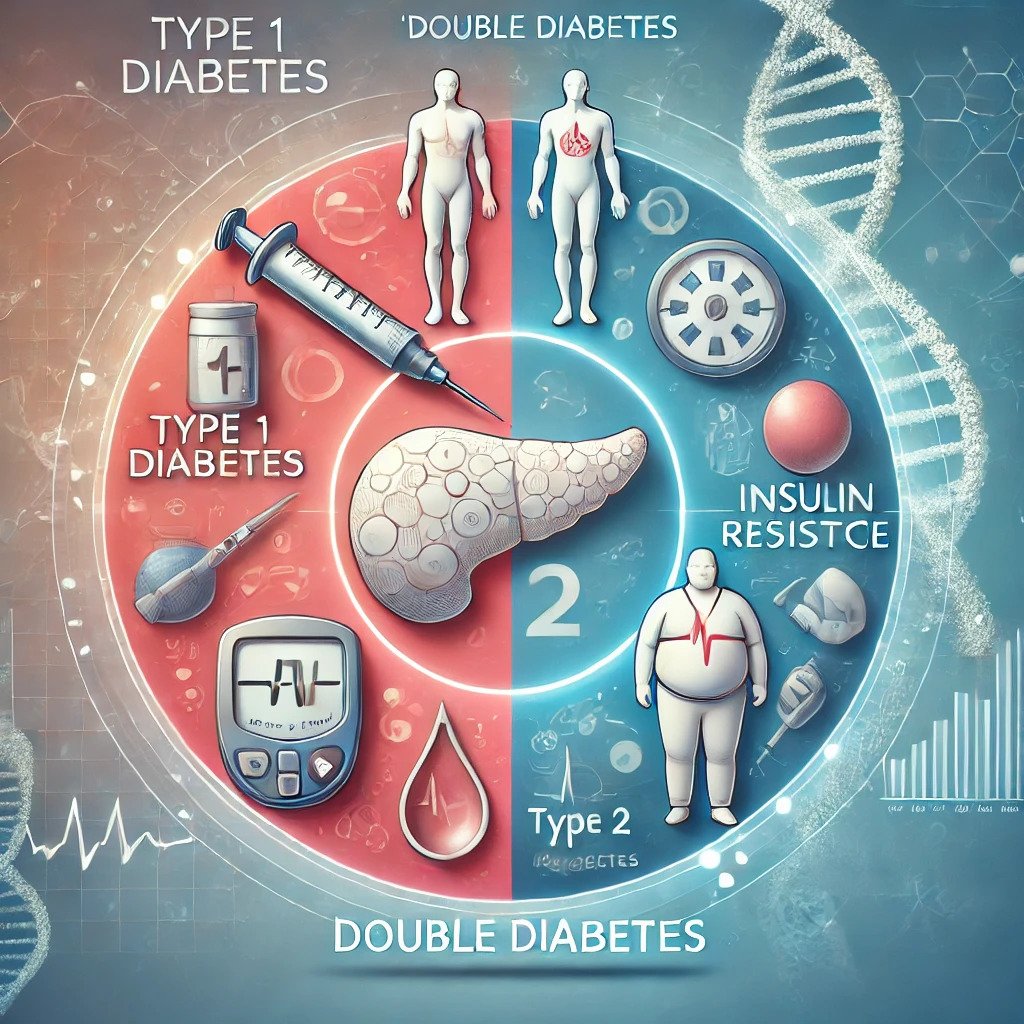
Double diabetes refers to the coexistence of **type 1 diabetes** (an autoimmune condition destroying insulin-producing beta cells) and **insulin resistance** (a hallmark of type 2 diabetes). Patients with type 1 diabetes who develop obesity or metabolic syndrome often struggle with both insulin deficiency *and* insulin inefficiency, creating a dual burden.
Key Characteristics:
1. Autoimmune Dysfunction: Like type 1 diabetes, patients test positive for autoantibodies (e.g., GAD65).
2. Insulin Resistance: Cells fail to respond to insulin, mimicking type 2 diabetes.
3. Weight Gain: Often linked to long-term insulin therapy or lifestyle factors.
Why the Term Is Controversial:
-No Official Classification: The American Diabetes Association (ADA) doesn’t recognize “double diabetes” as a distinct condition. Critics argue it’s simply type 1 diabetes complicated by insulin resistance.
– Overlap with “Type 1.5”: Some use “type 1.5 diabetes” (latent autoimmune diabetes in adults, or LADA) interchangeably, though LADA progresses slower than classic type 1.
Causes and Risk Factors of Double Diabetes
The rise of double diabetes is tied to modern lifestyle shifts and genetic predispositions.
1. Obesity Epidemic
– Over 42% of U.S. adults are obese, increasing insulin resistance risks even in type 1 patients.
Example: A 2021 study in *Diabetes Care* found 30% of type 1 diabetics had obesity, doubling their insulin needs.
2. Insulin Therapy Side Effects
– Insulin promotes fat storage, leading to weight gain over time. This creates a vicious cycle: higher insulin doses → more weight gain → worse insulin resistance.
3. Genetic Factors
– Certain genes (e.g., TCF7L2) are linked to both autoimmune dysfunction and insulin resistance.
4. Sedentary Lifestyles and Poor Diets
– Processed foods and inactivity exacerbate metabolic syndrome, even in genetically predisposed type 1 patients.
—
<h2>Diagnosing and Managing Double Diabetes </h2>
Diagnosis and treatment require balancing autoimmune care with metabolic interventions.
Diagnostic Challenges
– Blood Tests: Elevated blood glucose + presence of autoantibodies (confirming type 1).
– Insulin Resistance Markers: High triglycerides, low HDL cholesterol, and elevated HOMA-IR scores.
-Clinical Clues: Patients requiring unusually high insulin doses despite adhering to therapy.
Management Strategies
1. Medication Adjustments
-Metformin: Improves insulin sensitivity in type 1 patients (per a 2019 *Lancet* study).
GLP-1 Agonists**: Drugs like liraglutide aid weight loss and glycemic control.
-SGLT2 Inhibitors**: Off-label use in type 1 diabetes shows promise but risks ketoacidosis.
2. **Lifestyle Interventions**
– Diet: Low-glycemic, high-fiber foods to stabilize blood sugar.
– Exercise: Strength training improves insulin sensitivity more than cardio alone.
3. Psychological Support
– Managing dual diagnoses increases burnout risk. Cognitive behavioral therapy (CBT) helps patients cope.
—
Conclusion
Double diabetes underscores the complexity of modern diabetes care, where autoimmune and metabolic disorders collide. While the term remains unofficial, its emergence reflects urgent public health challenges: rising obesity rates, insulin overuse, and genetic vulnerabilities. For patients, early intervention with tailored therapies and lifestyle changes can mitigate complications like heart disease and kidney failure. As research evolves, clearer guidelines may emerge—but for now, awareness and individualized care are key.
—
References
1. American Diabetes Association. (2023). *Standards of Medical Care in Diabetes*. Diabetes Care.
2. Cleland, S. J. (2019). *Metformin in Type 1 Diabetes: A Systematic Review*. The Lancet.
3. Dabelea, D. (2021). *Obesity Trends in Type 1 Diabetes*. Diabetes Care.
4. World Health Organization. (2023). *Global Report on Diabetes*.
5. Jones, A. G., & Hattersley, A. T. (2013). *The Clinical Utility of C-Peptide Measurement in Diabetes*. Diabetologia.
Pingback: Type 2 Diabetes: Key Differences and Risk Factors - abcsofa1c.com
Pingback: **Medicare Spending on Type 2 Diabetes Drugs Skyrockets to $35.8B in 2023** - abcsofa1c.com