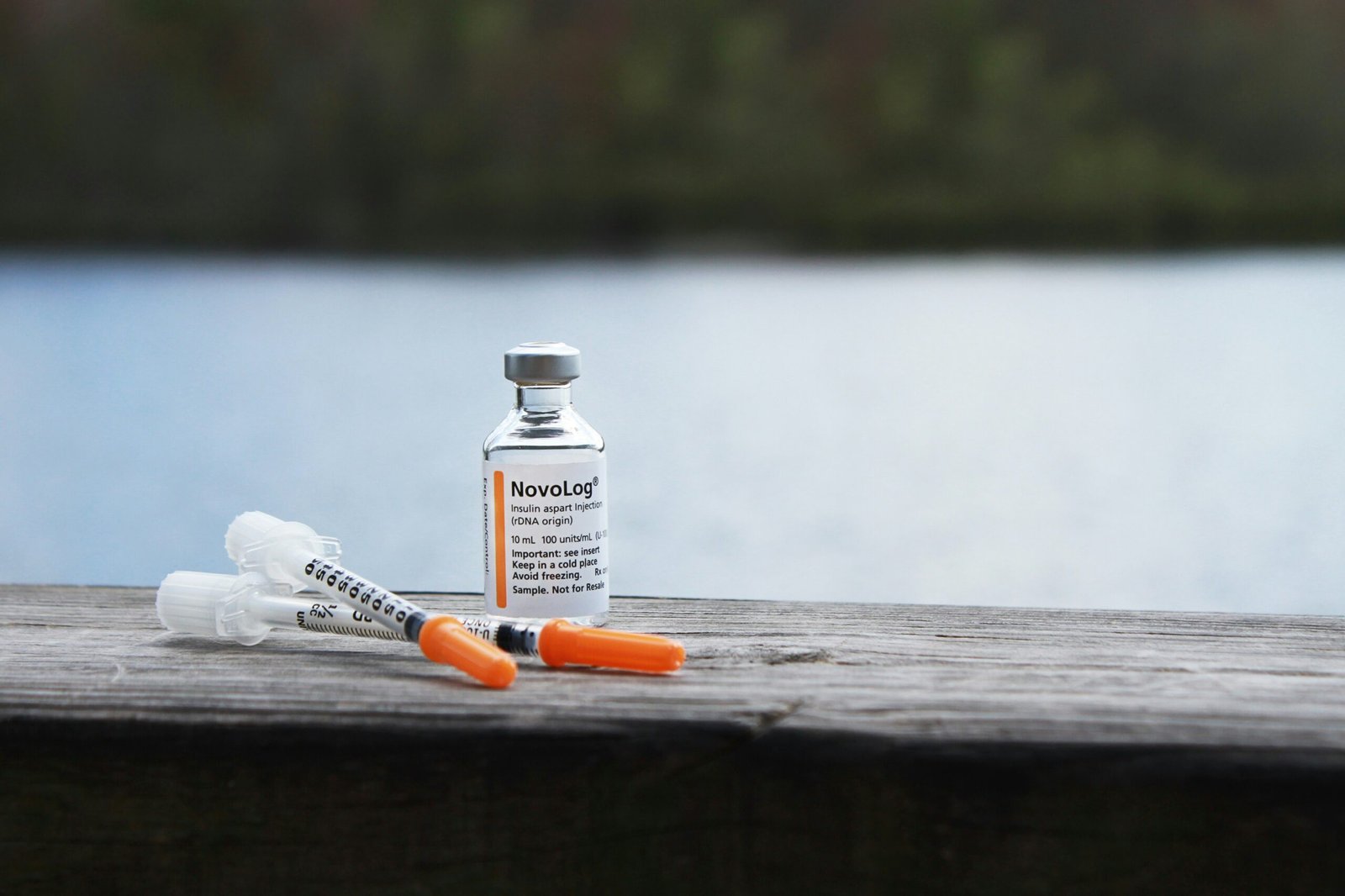
Bolus: From Ancient Medicine to Modern Technology
Disclamer
The information provided regarding “bolus” physiology, insulin management, and veterinary monitoring is intended for educational and informational purposes only and does not constitute medical or veterinary advice. Clinical guidelines, particularly regarding insulin dosing for high-fat and protein meals, are subject to change, and significant inter-individual variability exists regarding optimal treatment. The dosing strategies described, such as the Warsaw method, serve only as starting points; incorrect application or “insulin stacking” may result in severe hypoglycemia, hyperglycemia, or injury. Additionally, symptoms related to swallowing disorders, such as aspiration, can represent life-threatening emergencies requiring immediate professional intervention. Similarly, veterinary data regarding rumen boluses is for management support and does not replace professional veterinary care. Always seek the advice of a physician or other qualified health provider with any questions you may have regarding a medical condition, and never disregard professional medical advice or delay in seeking it because of something you have read in this material.
Introduction
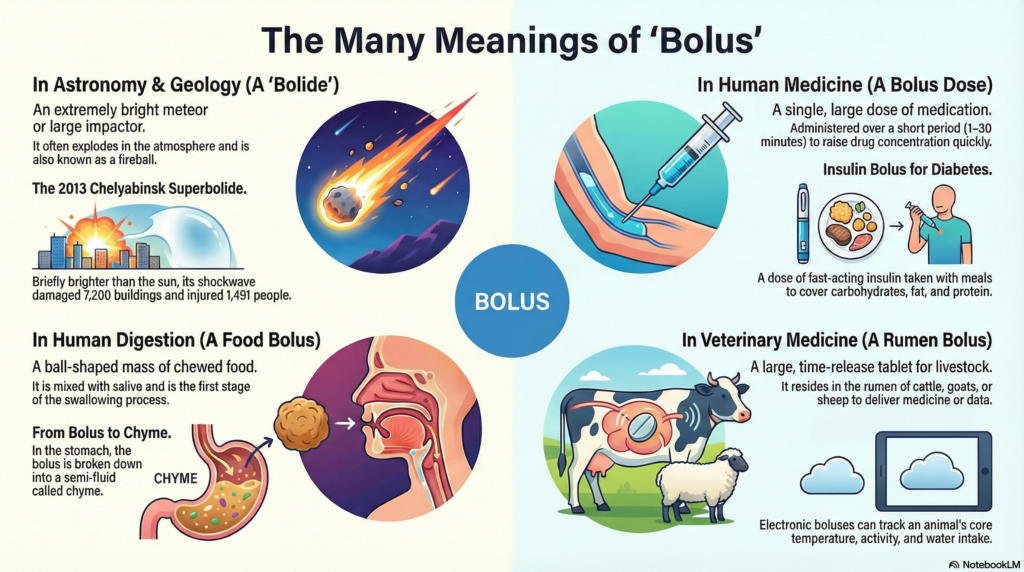
The word “bolus” carries remarkable versatility, spanning ancient medicine, modern diabetes care, veterinary science, and even aerospace engineering. While most people encounter this term in medical contexts—whether swallowing food or receiving medication—its applications extend far beyond the human body. From the rounded mass of chewed food traveling down your esophagus to sophisticated sensors monitoring cattle health in real-time, the concept of a bolus represents a fascinating intersection of biology, medicine, and technology.
Etymology and Origins
The term “bolus” traces its lineage through Late Latin bōlus, meaning “clod of earth” or “lump,” which itself derives from Ancient Greek βῶλος (bôlos), referring to a clod or lump. This etymology perfectly captures the core concept that unites all uses of the word: a discrete, rounded mass or concentrated dose of something.
The Greek root bôlos should not be confused with bolis, which means “missile” or “meteor,” though both share Indo-European linguistic roots. The Greek bōlos meaning “lump” has been retained in English, evolving to encompass everything from masses of chewed food to large pharmaceutical pills to precise doses of medication delivered intravenously.
Interestingly, the term spawned the whimsical 19th-century phrase “holus-bolus,” a mock-Latin reduplication meaning “all at once” or “in one lump”—a fitting description of how bolus medications work.

The Food Bolus: Foundation of Human Digestion
Formation and Function
In human physiology, a bolus represents one of the body’s most elegant mechanical processes. When you take a bite of food, your teeth and tongue collaborate to create a cohesive, rounded mass suitable for swallowing. This process, far more complex than it appears, involves precise coordination of multiple muscle groups and sensory feedback systems.
The formation begins during the oral preparatory phase, where food is manipulated on the tongue and mixed with saliva. Saliva serves multiple crucial functions: it lubricates the food, begins chemical breakdown of starches through enzymes, and helps bind the food particles into a cohesive unit. In individuals with weakened oral musculature, food may be “pocketed” in the cheeks rather than properly formed into a bolus, a sign that swallowing function may be compromised.
The Journey Through the Body

Once formed, the bolus embarks on a carefully choreographed journey:
Oral Transit Phase: The tongue executes a front-to-back squeezing motion, pressing the bolus against the hard palate and propelling it toward the back of the mouth. This seemingly simple action requires remarkable precision—the tongue must generate sufficient force to move the bolus while maintaining its integrity.
Pharyngeal Phase: As the bolus reaches the throat, an intricate series of protective mechanisms activate. The soft palate elevates to seal off the nasal passages, preventing food from entering the nose. Simultaneously, the epiglottis—a leaf-shaped flap of cartilage—folds down to cover the trachea, ensuring the bolus enters the esophagus rather than the airway. This phase happens in less than a second, yet involves over 25 pairs of muscles working in precise sequence.
Esophageal Phase: Upon entering the esophagus, the bolus encounters a different transport mechanism. Rhythmic muscular contractions called peristalsis squeeze the bolus downward, like squeezing toothpaste from a tube. These waves of contraction move at approximately 2-4 centimeters per second, taking roughly 8-10 seconds for the bolus to reach the stomach.
Transformation to Chyme
The bolus’s identity as a discrete mass ends once it enters the stomach. There, powerful muscular contractions churn it together with gastric juices—including hydrochloric acid and digestive enzymes—transforming it into a semi-liquid substance called chyme. This transformation is essential for nutrient absorption in the small intestine, demonstrating how the bolus represents just one stage in the continuous process of digestion.
Medical Pharmacology: Delivering Precise Doses
Defining the Medication Bolus
In medicine, a bolus refers to administering a discrete amount of medication within a specific timeframe, generally 1-30 minutes, to rapidly raise its concentration in blood to an effective level. This approach contrasts sharply with continuous infusions, where medication is delivered steadily over extended periods.
The bolus delivery method serves a critical purpose: achieving therapeutic drug levels quickly. When someone arrives at an emergency room experiencing severe pain, waiting for gradual medication buildup is not an option. A bolus injection delivers immediate relief by flooding the bloodstream with medication, bringing concentrations to effective levels within minutes.
Routes of Administration
Medical professionals employ several routes for bolus delivery, each with distinct characteristics:
Intravenous (IV) Bolus: This represents the fastest method. A bolus delivered directly to veins through an intravenous drip allows much faster delivery which quickly raises the concentration of the substance in the blood to an effective level. This method is commonly used at the beginning of treatments or following procedures like dialysis that remove medication from the blood.
Subcutaneous Injection: When medication is injected beneath the skin, it forms a visible bump or bolus that slowly releases its contents into the bloodstream. This method provides sustained drug release over hours. Unfortunately, this route is also exploited in substance abuse—heroin users employ “skin popping” to create subcutaneous boluses that stave off withdrawal symptoms while avoiding the intense euphoria that might draw unwanted attention.
Intramuscular Injection: Vaccines frequently use this route, allowing antigens to be released gradually from the muscle tissue. This slow release gives the immune system time to recognize the foreign substance and mount a proper response, creating the immunity vaccines are designed to provide.
Diabetes Management: The Insulin Bolus Revolution
Understanding Basal vs. Bolus Insulin
For people with diabetes, understanding the distinction between basal and bolus insulin is fundamental to managing their condition. Basal insulin keeps blood sugar levels steady throughout the day and night, while bolus insulin helps manage the spikes in blood sugar that happen when we eat.
Think of basal insulin as cruise control on a highway—it maintains a steady baseline, compensating for the liver’s continuous glucose output even during fasting. Long-acting basal insulin formulations like glargine or detemir provide this “background” coverage for approximately 24 hours, requiring just one injection daily.
Bolus insulin, in contrast, acts as the accelerator pedal—it provides rapid, powerful glucose control when needed most: at mealtimes. When someone eats carbohydrates, their blood glucose rises sharply. Rapid-acting insulin analogs can match this spike, typically beginning to work within 15 minutes, peaking in 1-2 hours, and lasting 3-5 hours.
Advanced Bolusing for Complex Meals
While simple carbohydrate-based meals require straightforward bolus dosing, mixed meals containing significant fat and protein present unique challenges. Fats slow gastric emptying—the rate at which food leaves the stomach—which can delay carbohydrate absorption by hours. Proteins can also convert to glucose through gluconeogenesis, causing delayed blood sugar rises hours after eating.
To address these challenges, insulin pump users have developed sophisticated dosing strategies:
Dual-Wave or Square-Wave Bolus: This approach splits the insulin dose. Part delivers immediately to cover initial carbohydrate absorption, while the remainder releases gradually over several hours to address delayed glucose rises from fat and protein. For instance, a pizza might warrant 50% of the calculated dose immediately and 50% delivered over 3-4 hours.
The Warsaw Method: This mathematical approach converts fat and protein calories into equivalent “carbohydrate units” for dosing purposes. It recognizes that while fats and proteins aren’t carbohydrates, they still affect blood glucose and require insulin coverage.
Pre-bolusing: Taking insulin 10-15 minutes before eating allows the insulin to begin working as food digestion starts, better aligning insulin action with glucose absorption. This technique can significantly reduce post-meal blood sugar spikes.
Clinical Evidence
Most general medical and surgical patients with Type 2 diabetes treated with diet, oral antidiabetic agents, or low-dose insulin can be managed with a single daily dose of basal insulin with supplemental doses of rapid-acting insulin analogs before meals. This finding has revolutionized hospital diabetes management, offering simpler regimens that still achieve excellent glucose control while reducing hypoglycemia risk.
Veterinary Science: Smart Boluses for Livestock
Traditional Pharmaceutical Boluses
In veterinary medicine, boluses have long served as delivery vehicles for sustained-release medications in ruminant animals like cattle, goats, and sheep. These large, time-release tablets lodge in the rumen—the first chamber of the digestive system—where they slowly dissolve over weeks or months, delivering vitamins, minerals, or therapeutic agents.
Veterinarians also use the term “bolus” to describe subcutaneous fluid injections. When a dehydrated cat receives subcutaneous saline, the fluid forms a temporary lump under the skin—a bolus that gradually absorbs over several hours, providing sustained rehydration.
The Telemetry Revolution: SmaXtec and Smart Agriculture
Modern technology has transformed the humble veterinary bolus into a sophisticated health monitoring platform. The smaXtec bolus continuously measures data inside the reticulum including temperature, rumination activity, water intake, and pH values, transmitting this information wirelessly to farmers’ smartphones and computers.
The system works elegantly: A bolus slightly larger than traditional pharmaceutical versions is administered orally using a specialized applicator. The bolus resides in the reticulum where it remains for the life of the cow due to its own weight, recording six metrics: reticular temperature, adjusted reticular temperature, activity index, rumination index, water intake index, and an estrus index.
Key Monitoring Capabilities
Temperature Monitoring: The bolus measures reticular temperature with exceptional precision—within ±0.018°F. It provides two temperature readings: standard reticular temperature (RT) and adjusted reticular temperature (ART). Adjusted reticular temperature is a measure of reticular temperature excluding temperature changes from drinking events, providing a more accurate measure of core body temperature.
This precision enables disease detection up to 4-7 days before clinical symptoms appear. Recent studies have demonstrated that the system can detect bird flu (HPAI) in dairy cows a full week before visible symptoms, potentially preventing devastating herd losses.
Water Intake: Unlike any competing system, smaXtec tracks individual drinking behavior by detecting rapid temperature drops when cold water enters the rumen. Since milk production is directly tied to water consumption, this data provides early indicators of both health problems and production potential.
Rumination Activity: The bolus measures rumination by recording actual rumen contractions, rather than calculating or estimating activity. This direct measurement provides accurate data on digestive health, with changes in rumination patterns serving as early warning signs for numerous conditions.
pH Monitoring: Optional pH-sensing boluses monitor rumen acidity, the gold standard for feeding management. This allows farmers to detect subacute rumen acidosis—a common condition that’s nearly impossible to identify visually—and optimize feed rations to maximize milk production without compromising animal health.
Real-World Impact
Over 70,000 smaXtec sensors now operate across more than 25 countries. The technology proves equally valuable on 60-cow operations and farms with 500+ animals. Farmers report dramatic improvements in heat detection for breeding, reduced time to pregnancy, earlier disease detection, and optimized feeding programs. The system has become particularly valuable for organic farms, where early disease detection can help avoid medications and maintain certification.
Specialized Scientific Applications
Radiation Therapy
In radiation oncology, a bolus refers to a completely different kind of material: a waxy tissue-equivalent material placed on the skin surface to homogenize or modulate the range of dose from external beams of radiation. This bolus compensates for body surface irregularities and ensures that radiation penetrates to the proper depth, delivering precise doses to tumors while sparing healthy tissue.
Medical Imaging
Radiologists employ “bolus tracking” techniques in computed tomography (CT) scans. When contrast dye is injected as a bolus, specialized imaging sequences follow its movement through blood vessels, creating detailed maps of vascular anatomy and detecting abnormalities like blockages or aneurysms.
Aerospace Engineering
In an entirely different context, aerospace engineers use “bolus” to describe a type of space tether—a long cable connecting spacecraft or satellites. These tethers can serve various purposes, from stabilizing satellite orientation to enabling momentum exchange between spacecraft.
Cultural and Miscellaneous Uses
The term “bolus” extends even into cultural and geographic domains. Geographic features bear the name in Iran and Turkey, reflecting the term’s ancient roots in those regions.
In culinary traditions, the Netherlands celebrates “Zeeuwse Bolus,” a sweet pastry from the province of Zeeland, while Belgium has its own pastry variation also called “bolus.” These naming choices likely reference the rounded, lump-like shape characteristic of these baked goods.
Artists historically used “bolus armenus,” a reddish clay pigment, for preparing surfaces before gilding. In textile manufacturing, a “bolus hook” serves as a specialized instrument in Jacquard looms, the programmable weaving machines that presaged modern computing.
Conclusion
From its Ancient Greek origins meaning “lump” or “clod,” the word “bolus” has evolved to encompass an extraordinary range of meanings across medicine, agriculture, technology, and culture. Whether describing the rounded mass of food we swallow without thinking, the precise insulin dose a diabetic calculates before each meal, or the sophisticated sensors monitoring cattle health in real-time, the concept remains fundamentally the same: a discrete, concentrated unit serving a specific purpose.
This linguistic journey illustrates how scientific and medical terminology adapts and expands while retaining core meanings. The humble bolus—in all its varied forms—exemplifies how a single word can bridge ancient medicine and cutting-edge technology, human healthcare and veterinary science, the mundane act of swallowing and the complex calculus of diabetes management. As medical and agricultural technologies continue advancing, we can expect the bolus to evolve further, taking on new meanings while honoring its ancient roots as simply “a lump.”