

Medical disclaimer: This article is for informational purposes only and does not constitute medical advice. People with diabetes should receive regular foot exams from their healthcare provider and consult a podiatrist for any foot concerns.
Foot problems are among the most serious — and most preventable — complications of Type 2 diabetes. Diabetic foot disease accounts for more than 60% of non-traumatic lower-limb amputations in the United States, yet the majority of these amputations can be prevented with consistent monitoring and care. The NIDDK estimates that people with diabetes are 10–30 times more likely to undergo lower extremity amputation than people without diabetes.
Why Diabetes Creates Foot Problems
Two distinct pathways — neuropathy and vascular disease — converge to make foot health a critical concern in Type 2 diabetes:
- Peripheral neuropathy — high blood glucose damages nerves in the feet and lower legs, reducing sensation. A blister, cut, or pressure sore that would normally cause pain goes unnoticed. Without pain signaling, injuries progress to ulcers before treatment is sought.
- Peripheral artery disease (PAD) — atherosclerosis reduces blood flow to the lower extremities. Reduced circulation means wounds heal slowly, infection risk is higher, and even minor injuries may not resolve without intervention.
When both neuropathy and PAD are present together — which is common in longstanding diabetes — even a small wound can become limb-threatening within days.
Daily Foot Care: What to Do Every Day
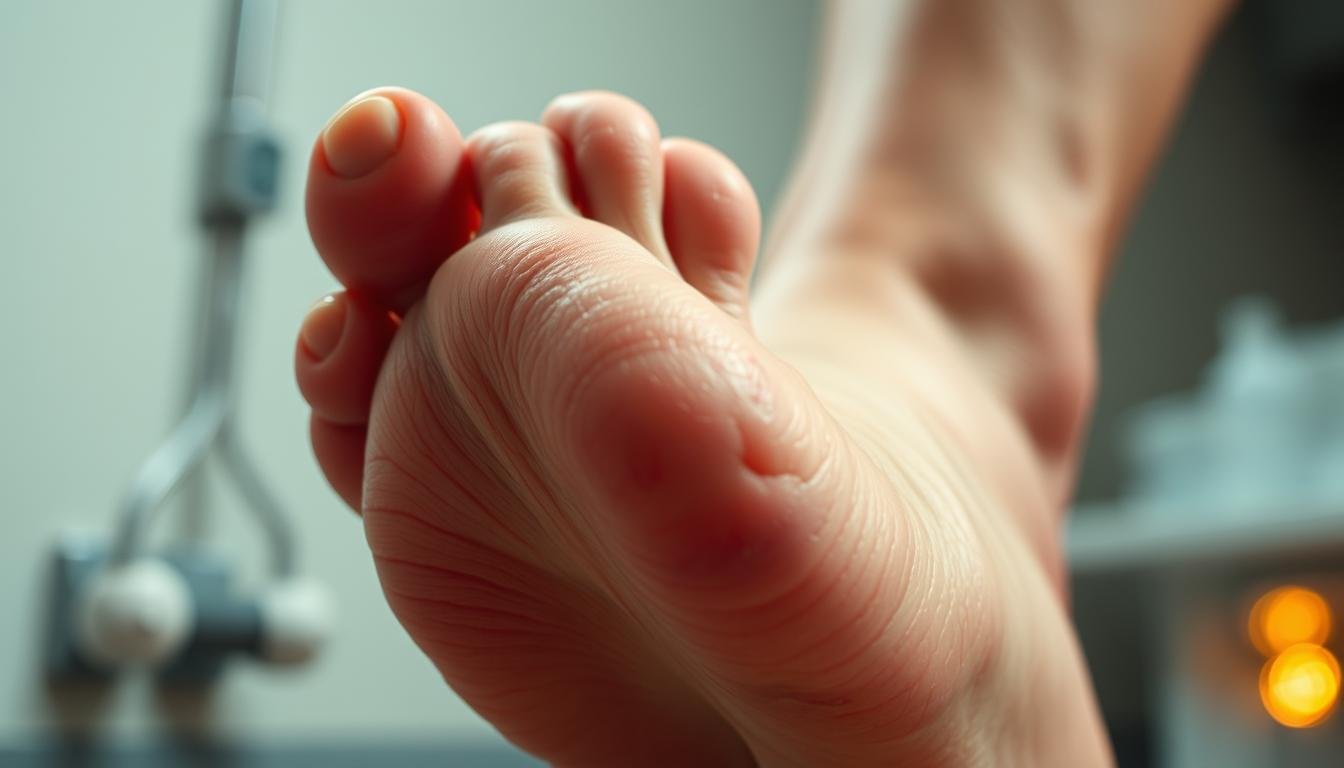
- Inspect both feet daily — look at the soles, between the toes, and around the heels. Use a mirror if necessary, or ask a family member to help. Look for: cuts, blisters, redness, swelling, bruising, or any change in skin color or temperature
- Wash feet daily in warm water — test water temperature with your elbow or wrist, not your feet (reduced sensation means you can’t reliably detect hot water); dry thoroughly, especially between the toes
- Moisturize dry skin — apply lotion to the tops and bottoms of feet but not between the toes (moisture between toes promotes fungal growth)
- Change socks daily — moisture-wicking, seamless socks reduce friction and infection risk
- Never go barefoot — even indoors; injuries on hard or uneven surfaces are a leading cause of foot ulcers
Footwear: The Most Important Protective Factor
Ill-fitting shoes are responsible for a large proportion of diabetic foot injuries. Pressure points, friction, and tight toe boxes cause injuries that go unfelt due to neuropathy. Key footwear principles:
- Shop for shoes in the afternoon (when feet are slightly larger from daily swelling)
- Choose shoes with a wide toe box, good arch support, and cushioned soles
- Avoid pointed toes, high heels, and open-toe sandals
- Check the inside of shoes for foreign objects before putting them on — a small pebble can cause a significant pressure sore without you realizing it
- People with significant neuropathy or deformities may qualify for therapeutic footwear covered by Medicare
Nail and Skin Care
- Trim toenails straight across; don’t cut the corners (to prevent ingrown nails)
- File sharp edges with an emery board rather than cutting them close to the skin
- Don’t attempt to remove corns or calluses at home — see a podiatrist
- Never use sharp instruments or chemical corn removers on diabetic feet
Warning Signs That Require Immediate Attention
Contact your healthcare provider the same day if you notice:
- Any wound, sore, or blister that isn’t healing within a few days
- Redness, warmth, or swelling in any area of the foot
- Drainage, odor, or darkened skin around a wound
- New areas of numbness or tingling
- A change in foot shape (this can indicate Charcot foot — a serious neuropathic complication requiring immediate treatment)
Regular Professional Foot Exams
The ADA recommends a comprehensive foot examination at least once per year, and at every visit for people with neuropathy or prior foot problems. This exam should include: monofilament sensory testing, vibration sensation, pulse checks, and visual inspection for deformities. Seeing a podiatrist annually — or more frequently if you have neuropathy or PAD — significantly reduces amputation risk.
Related Reading
- Type 2 Diabetes Complications: What They Are and How to Prevent Them
- What Happens to Your Body When You Have Type 2 Diabetes
- How Is Type 2 Diabetes Managed? Targets, Treatments, and Daily Care
Want a clear, practical plan for managing your A1C?
The ABCs of A1C gives you 5 simple rules — in plain language — to understand your blood sugar and lower it.
This article is part of our complete guide: Type 2 Diabetes Complications: What to Watch For